The Central Industrial Security Force (CISF) has taken over the security of Indian Parliament (Sansad Bhawan) after the incident when 2 miscreants on 13 Dec 2023 entered the Lok Sabha with gas canisters.
The parliament security was earlier being handled by the Delhi Police Special Cell.
CISF is one of the 7 paramilitary organizations under the Central Armed Police Forces (CAPF) headed by the Indian Home Minister.
What is CISF?
CISF or the Central Industrial Police Force is the law enforcement and security organization responsible to protect critical industrial and public infrastructure such as mines, oil fields, atomic power, ISRO, DRDO, steel plants, etc. Typically they operate with other law enforcement agencies such as State Industrial Security Forces and local police.
It was setup under the CISF act of the Indian Parliament on 15 March 1969. Later it was categorized as an armed force under Act 14 of 1983.
As of December 2023, it has a sanctioned strength of 1,80,000 personnel.
For the most part of the history, USA has acted against the interests of India, be it in 1971 when it sent nuclear ships to India or in 2023 when its trying to push a false narrative against Indian government.
USA Sent Naval Fleet Against India in 1971
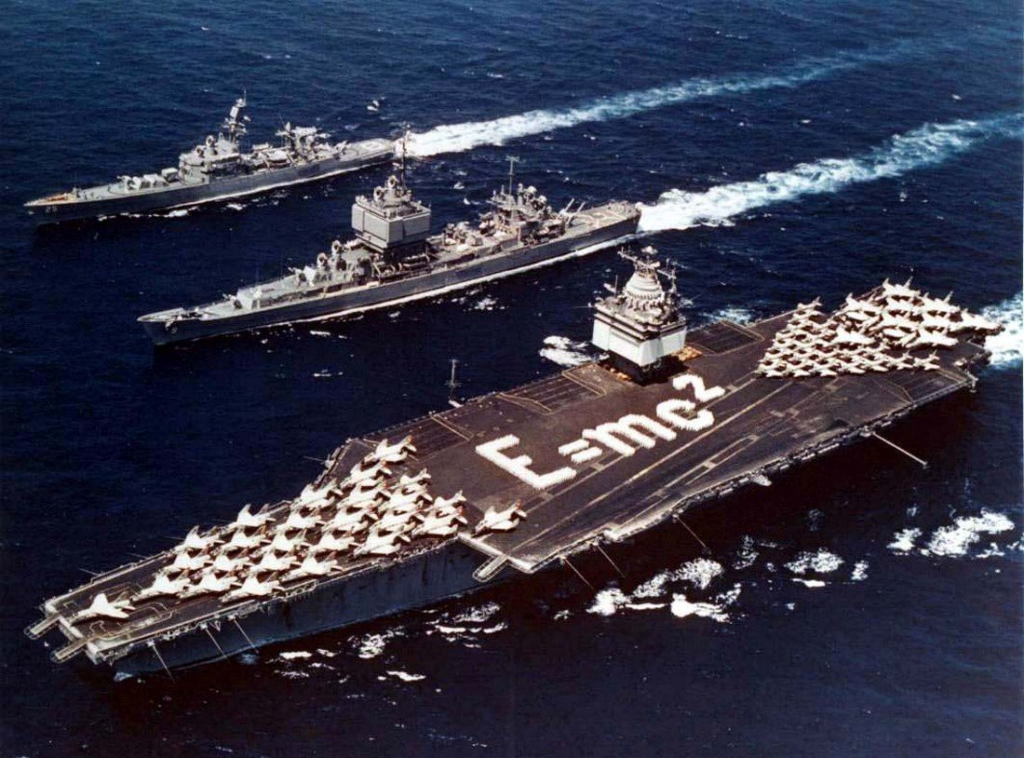
USS Enterprise with its Carrier Strike Group of USA
On 14 December 1971 Task Force 74 (Navy Ships of USA + UK + Australia) containing the nuclear aircraft carrier USS Enterprise and its entire seventh fleet, were ordered to intimidate and possibly also attack Indian positions along the Bay of Bengal. This happened despite USA’s earlier commitment to human rights which its ally Pakistan was grossly violating in Bangladesh.
Despite all, the USS Enterprise crossed Malacca straits between the night of 13 – 14 December, 1971 and entered the Bay of Bengal on 15th. The carrier strike group was asked to proceed slowly at the speed of 15 knots to conserve fuel.
According to a book by Blechman and Kaplan (ISBN 0-8157-0985-4, page 188), the US Government was proceeding to evacuate Pakistani Forces. Evidence also suggests that the US Navy was also tasked to target Indian military facilities.
At that time, the Soviet Naval Force with a nuclear ballistic missile submarine arrived to fulfil its end of the Soviet-India Friendship Treaty signed on 9 Aug 1971. The standoff is supposed to have prevented US interference in the war.
USA Sent Flimsy Evidence Against India in 2023
Designated Terrorist Pannun, USA Citizen
Though on a much smaller scale, India and USA are still going through a standoff as of 15 December 2023. The US Government alleged that Indian Government used a person named Nikhil Gupta (alleged drug dealer) to allegedly hire a hitman against Pannun, a designated terrorist by Govt of India.
It was alleged that CRPF was involved in the incident, which is a Police Force in India and primarily operates against Naxals, Crowd Control and in election duties.
It was alleged that a total of $100,000 was to be paid for the attempt on Pannun. Why a cash-trail when untraceable crypto mixers are available?
The same gunmen was allegedly hired which did a similar successful attempt on Nijjar. Why would someone leave a trail?
The recent incident of gas attack in the Indian Parliament on 13 Dec 2023 reminds us of a parliament attack. Then on 13 Dec 2001, 5 terrorists trained from Pakistan attacked the Indian Sansad Bhawan (Parliament). The incident resulted in the deaths of 8 Indian security personnel, one gardener, and all the 5 attackers. The injured personnel which included press, officers and security staff were 18 in number.
This attack triggered a military standoff between India and Pakistan in 2002 with an eventual disengagement in
Aim of the Attack
As per an interview of Afzal Guru, the aim of the attack was to cause maximum damage to the MPs present inside the parliament.
Chronology of the Events
13 Dec 2001: Five terrorist enter parliament compound in a car marked as Home Minister.
15 Dec 2001: Delhi Police Arrest Afzal Guru from J&K, Syed Geelani from his house in Mukherjee Nagar, Delhi, Shaukat was arrested later from Srinagar and his wife Afsan too.
29 Dec 2001: Afzal sent to a 10 Day Police remand
4 June 2002: Charges framed
16 and 18 Dec 2002: Trial court gives death sentence to all except Afsan, who received 5 years imprisonment
30 Aug 2003: Ghazi Baba, the mastermind of the attacks was killed in a clash with BSF
29 Oct 2003: Delhi High Court upholds trial court judgement
4 Aug 2005: Supreme Court upholds the judgement of Delhi High Court, commuted Shaukat’s death sentence to 10 years imprisonment.
26 Sep 2006: Delhi High Court orders Afzal to be hanged
3 Oct 2006: Tabasum (wife of Afzal) files mercy petition
12 Jan 2007: Afzal’s plea seeking review of death sentence is rejected by Supreme Court due to no merit
19 May 2010: Delhi Govt receinves Afzal’s mercy petition
30 Dec 2010: Shaukat released from Tihar jail
10 Dec 2012: Shushil Shinde (Home Minister) says he will examine Afzal’s petition
26 Jan 2013, President P Mukherjee rejects mercy petition
9 Feb 2013: Afzal hanged in Tihar Jail
Trial and Judgement of 2001 Parliament Attacks
A designated court for the Parliament Attack was constituted which was presided by the Judge S.N. Dhingra.
The 3 main perpetrators of the attack received death sentences.
Mohammed Afzal (Guru)
Shaukat Hassan
Syed Abdul Raza Geelani
Another accused Navjot Sandhu (Afsan Guru, Shaukat’s wife) was acquitted of all charges except under Sec 123 IPC and was convicted. She received 5 years rigorous imprisonment and a fine also was imposed.