Category: Science

  • Thallium Poisoning Case of Zhu Ling, 1994-1995

    Zhu Ling, a former student of the Tsinghua University in Beijing who got poisoned with Thallium in 1994 died on 22 December 2023, at the age of 50 reportedly due to brain tumor attack.

    Though she was treated in 1994-1995 successfully, yet her poisoning remained unsolved. The state media also tried a coverup of her case.

    Thallium Poisoning Incident

    In late 1994, Zhu Ling began to show strange signs and symptoms such as:

    • acute stomach pain
    • extensive hair loss

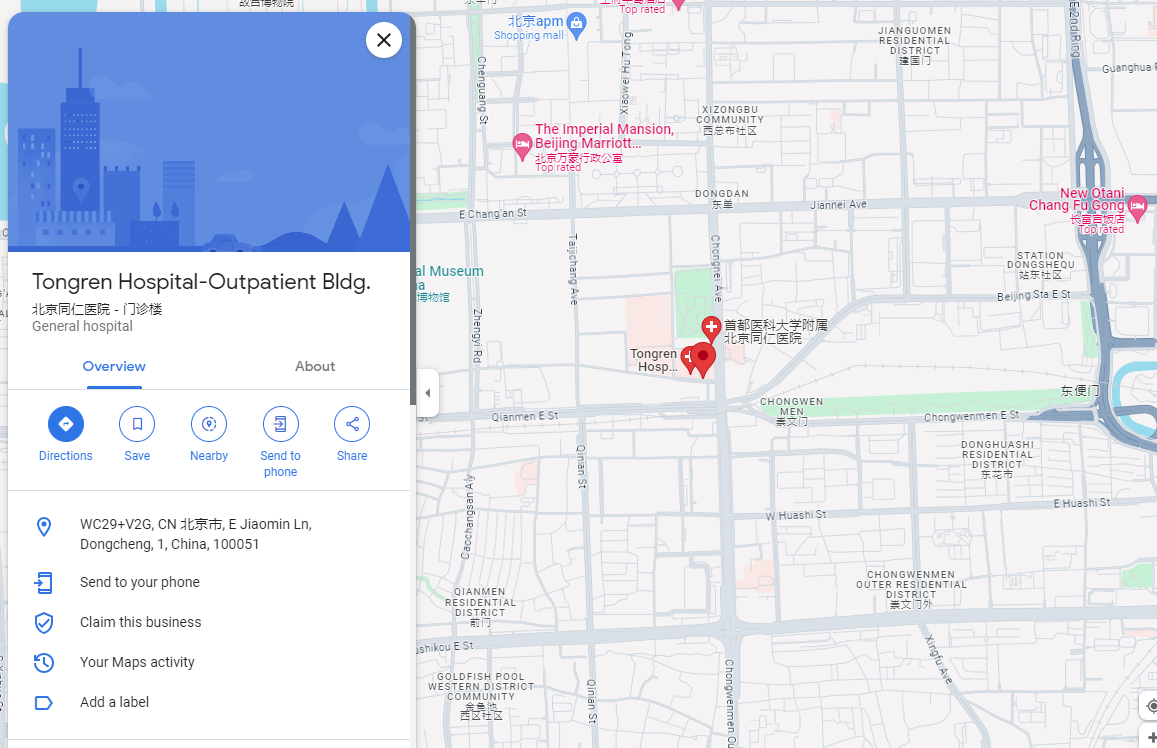
    She was then hospitalized in the Beijing Tongren Hospital and her conditions improved gradually. Soon she was able to return to class.
    However, a few months later in March 2023, she returned to the hospital with even worse symptoms than before. This time there were added symptoms of:

    • Loss of control over eye muscles
    • Pain in legs
    • Partial facial paralysis
    • Loss of ability to breathe properly

    This time, she needed acute ICU care and was placed on a respirator.

    A senior physician, Li Shun-Wei recalled a similar case that the physician treated in 1960s and was related to Thallium Poisoning. The physician strongly suspected that Zhu Ling was also suffering from the same kind of poisoning.

    However, Zhu Ling denied any physical contact with Thallium or any of its compounds which was later confirmed by her university’s chemistry department.

    Subsequently, she was given treatment for Guillain Barre Syndrome, a rapid onset of muscular weakness caused by deteriorating immune system. Still, her condition deteriorated rapidly.

    Successful Diagnosis

    The successful diagnosis of Thallium poisoning was made possible via the internet when two of her fellow students Cai Quanqing and Bei Zhicheng posted an SOS message on Usenet (an early form internet developed from Unix-Unix communications).

    The message contained symptoms of Zhu Ling and saw users responding within hours. They received more than 1500 responses out of which about 500 pointed towards Thallium Poisoning. The responders also suggested the usage of Prussian Blue as an antidote.

    Prussian Blue acts an ion exchange agent and absorbs the metallic Thallium ion.

    The medicine has been hailed as one of the most important medications by the World Health Organization (WHO).

    IUPAC Name: Iron(II,III) hexacyanidoferrate(II,III)
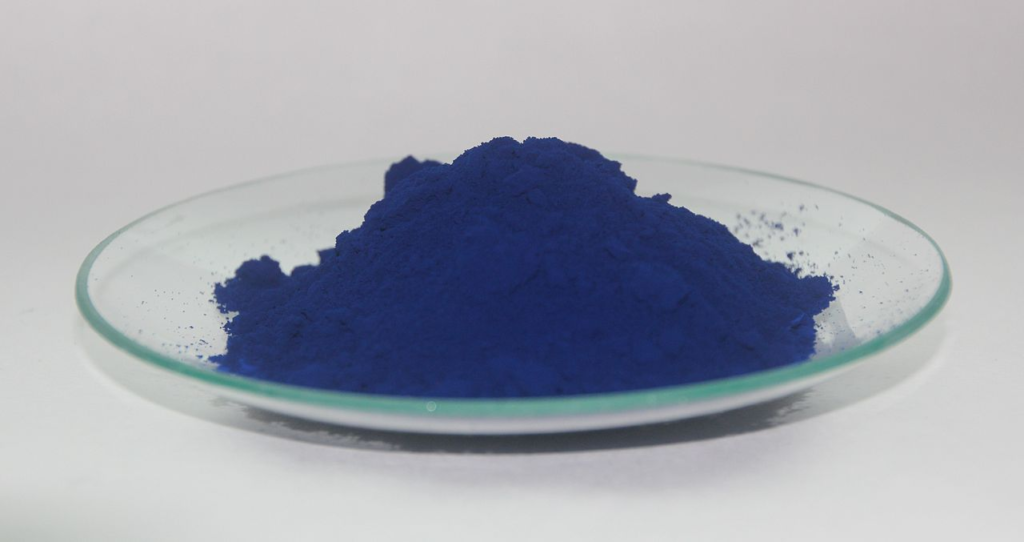
    Prussian Blue
    Prussian Blue

    Tests done on Zhu Ling confirmed that she had severely high levels of Thallium in her body, at least 10,000 times higher than usual levels of 5-10 parts per billion.

    Note: In the human body, Thallium is most abundantly present in the human hair in the above mentioned quantities.

    Investigation

    The prime suspect as declared by the police was claimed to be Sun Wei, a classmate of Zhu Ling at Tsinghua University from 1992-1997. The university also confirmed that Wei could be the only student who had access to Thallium compounds.

    However, in a statement released by Wei, she claimed her innocence in 2005, when the media finally got the information about Wei being a suspect.

    As per Police reports Wei was detained and questioned on April 2, 1997. She also signed a document acknowledging that she was a suspect. Eight hours later, her parents retrieved her from the police.

    Sun Wei’s grandfather Sun Yueqi was a senior and important member of the Chinese People’s Political Consultative Committee. Further, Sun Fuling, the deputy Mayor of Beijing from 1983 to 1993 was her first cousin, once removed.

    State’s Attempt to Hide Information

    Police caused a lot of delays in disclosing information and began investigations as late as May 1995.

    The information was finally revealed to the media as late as January 2006, more than 10 years after the case.

    Li Shushen was the primary investigator and has been quoted (unverified) by the Southern People Weekly to have claimed that the information is too sensitive for the public.

    About Zhu Ling

    Image of Zhu Ling, Source: NY Times
    Image of Zhu Ling, Source: NY Times

    Zhu Ling was a sophomore candidate at the Tsinghua University, Beijing when the incident occurred. She was an undergraduate student in Physical Chemistry. She majored as a Class 2 Student.

    Her classmates described her as attractive, intelligent and talented.

    Ling had an interest in music.

    Hair Sample Analysis Results in 2018

    Her poisoning pattern was later confirmed by a report released in 2018. Her hair sample was collected during the poisoning period and was sent to Richard Ash (Univ of Maryland) by her parents, that Zhu Ling had repeated exposure to Thallium for a period of at least 4 months. The doses were increased both in quantity and frequency.

    Also there was at least 2 weeks of repeated ingestion by an elevated amount of Lead in her body.

    Aftermath and Later Death in Dec 2023

    Zhu Ling was saved from her poisoning. However, her eyesight, intelligence and senses were permanently damaged.

    In an interview her parents confirmed that Zhu Ling had to be hospitalized once every year after the incident. Further, in 2011 after contracting a flu, Zhu was hospitalized for over 10 months which also impaired her ability to eat food due to a lung infection. Since then she could only be fed liquids.

    Zhu Ling with Her Parents
    Zhu Ling with Her Parents

    Zhu Ling died on 22 December 2023 at the age of 50, following a brain tumor attack in 18 Dec 2023. She also had a fever of 39 degree Celsius and fell into a severe coma.

    Effect of Thallium on Human Health
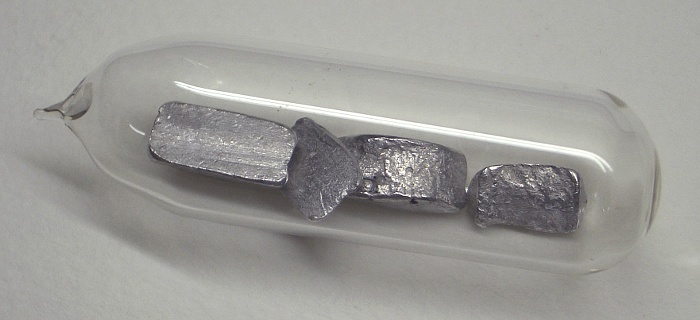
    Thallium Metal
    Thallium Metal

    Thallium and its compounds are extremely poisonous for humans. Since the element and its compounds are highly aquaphillic (water soluble), they are always treated with utmost care.

    On skin contact, Thallium compounds are rapidly absorbed.
  • Thallium: Properties, Compounds and Health Warnings

    Thallium is a chemical element with the symbol Tl and atomic number 81. It’s a soft, bluish-white metal that’s highly toxic.

    Article generated with ChatGPT.

    Core Information on Thallium:

    Thallium Metal
    Thallium Metal
    • Physical Properties:
      • Appearance: Soft, malleable metal with a bluish-white hue.
      • Melting Point: Low melting point at 304 degrees Celsius.
      • Boiling Point: Relatively low boiling point at 1,473 degrees Celsius.
      • Density: Moderately dense metal.
    • Chemical Properties:
      • Reactivity: Highly reactive with air, water, and acids.
      • Oxidation States: Exhibits +1 and +3 oxidation states primarily.
      • Toxicity: Extremely toxic to humans even in small quantities.
    • Electrical Properties: Thallium exhibits semiconductor properties, making it useful in some electronic devices.
    • Magnetic Properties: It doesn’t possess strong magnetic properties.

    Ores of Thallium

    Thallium is a relatively rare element in the Earth’s crust, occurring at an average concentration of about 0.7 parts per million. It’s often found associated with other heavy metals in various ores. The primary sources of thallium include:

    1. Sulfide Ores: Thallium is commonly found in association with sulfide minerals such as pyrites, galena, and sphalerite. Ores like lorandite and crookesite contain significant amounts of thallium.
    2. Sulfate Ores: Some sulfate minerals, like hutchinsonite and thallium-bearing epsomite, also contain thallium.
    3. Coal Deposits: Thallium can also be present in coal deposits, often released during the combustion of coal.
    4. Residues from Smelting Processes: Certain industrial processes, especially smelting of lead and zinc ores, can release thallium as a byproduct.

    Thallium Compounds:

    1. Thallium Sulfate (Tl2SO4): It’s a colorless, odorless crystalline solid. It’s highly toxic and poses severe health risks.
    2. Thallium Acetate (Tl(CH3COO)3): This compound is toxic and can cause severe health issues if ingested or inhaled.
    3. Thallium Chloride (TlCl): A white crystalline powder used in some specialized optical materials. It’s toxic.
    4. Thallium Nitrate (TlNO3): It’s a colorless or white crystal that’s also toxic and poses health risks.

    Health Effects:

    Thallium and its compounds are extremely toxic to humans. Exposure, even to small amounts, can cause severe health issues such as:

    • Nervous System Damage: Neurological problems including nerve damage, paralysis, and loss of coordination.
    • Digestive Problems: Severe gastrointestinal issues including vomiting, diarrhea, and abdominal pain.
    • Cardiovascular Issues: Damage to the heart and blood vessels.
    • Hair Loss: Thallium poisoning often results in hair loss.

    Handling any thallium compound requires extreme caution and adherence to strict safety protocols in a laboratory setting due to its high toxicity and potential health risks.

  • What is Dicyanian (Dicyanin) Dye? William J. Kilner

    The Dicyanian dye is a blue-coloured dye which is obtained from coal tar. The dye when coated on lens and weared as goggles gives you the power to see beyond the visible light spectrum.

    It is believed that John Kilner, a British Medical Electrician used it to see beyond what is normal to the human eye and supposedly led him even to visualize human aura.

    How Kilner made the Dicyanian Dye?

    Kilner extracted the Dicyanian Dye from Coal Tar, a black substance that is a by product of coke and goal gas.

    EChemi User Alexander Strong gave a suggestion to prepare Dicyanian Dye-

    Dicyanin blue dye can be prepared by the action of KOH [potassium hydroxide] + atmospheric O [oxygen] on α-γ-Dimethylquinolinium salts.

    Suggested Book: Dyestuffs and Coal-tar Products by Thomas Beacall

    Kilner’s Book: The Human Atmosphere?

    Kilner published his book, The Human Atmosphere in 1911. It was one of the first texts to study the human aura and claimed that the aura of a human showed their energy field. Weaker aura would mean illness, stress or bad mood. Similarly, a stronger aura would indicate a healthy person.

    Kilner also made dyed screens made from coal-tar derived substance called the “Dicyanian Dye“. The dye was then applied to the glass screens and a sensitive photographic plate captured an image through the screens.

    Kilner recorded that long term viewing through the lens was not recommended as it could be harmful for the eyes.

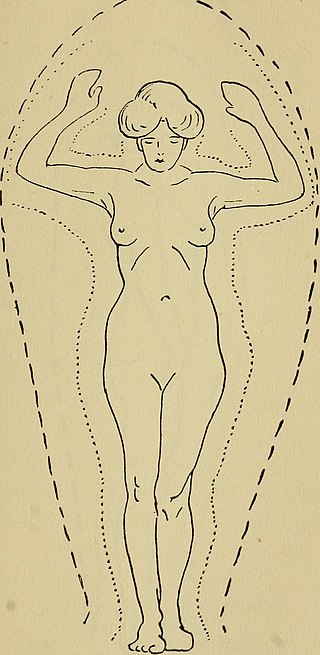
    He also recorded that on several occassions, Kilner and his associates were able to study the aura which extended several inches away from the naked human body and in several layers. He called them the inner aura (dotted lines) and the outer aura (dashed lines).

    Kilner's Diagram of Human Aura Visible with Dicyanian Glass
    Kilner’s Diagram of Human Aura Visible with Dicyanian Glass

    Challenges Faced by Kilner

    The Dicyanian Dye which was used to coat the Kilner screens were very difficult to extract.

    To mend this, Oscar Bagnall, a biologist suggested substituting the dye with pinacyanol which is a cyanian dye and used in electrophotographic plates.

    • IUPAC Name: (2E)-1-ethyl-2-[(E)-3-(1-ethylquinolin-1-ium-2-yl)prop-2-enylidene]quinoline;chloride
    • Common name: Quinaldine blue

    Kilner’s Glass

    Kilner’s Glasses supposedly made it possible to see Human Atmosphere (Aura) through N-rays. He also proposed that studying the human aura could be helpful in medical cases.

    #Note: N-rays were claimed to be discovered by French Physicist Prosper-René Blondlot but were later discovered to be non-existant.

    In the case of Kilner it is highly probable that he saw some wavelengths of the UV light.

    Decoding Kilner’s Glass

    If something is visible only via the Dicyanian Glass, it is highly probable that the dye introduces some kind of fluorescence that would change the wavelength of the original light and make it visible for the human eye.

    Minerals containing elements like zinc, uranium, or certain rare earth elements, if present as impurities in coal, could potentially cause fluorescence. Additionally, some organic compounds or aromatic hydrocarbons found in coal tar or coal-derived products might exhibit fluorescence under particular circumstances.

    The aura visible through the Dicyanian coated glass could be probably “Ultraviolet Light”.